Photosynthesis
Applying Photosynthesis
Plants are not the only photosynthetic organisms on Earth. Algae and bacteria also have the ability to use solar energyglossary term (opens in a new window) to produce organic compounds and release oxygen. Photosynthesisglossary term (opens in a new window) is a vital process to all living organisms, but when it occurs at uncontrollable rates, problems can occur.
Algae are important ocean organisms. Under normal conditions, growth of algae is maintained at regular levels. However, conditions can be altered because of weather, temperature, toxins, or environmental pollutants. When conditions change to favor the reproduction and growth of algae, their growth can result in a population explosion called an algal bloom.
One of the more common algal blooms is associated with a species that produces a discoloration to the water called red tide. The coloring is due to photosynthetic pigments contained within the algae. Although referred to as red tide, the waters can also be brown, purple, orange, or yellow.
Red tides may or may not be harmful depending on other circumstances. When massive amounts of algae from a bloom die, their bodies decay. This decay releases the organic compounds that make up their bodies. The release of these compounds can cause a depletion of oxygen in the water that is necessary for other organisms to survive.
In 2011, a record-setting algal bloom covered parts of Lake Erie, one of the Great Lakes. Scientists linked the massive bloom to runoff from fertilizers used on nearby farmlands. The lake was unusually warm and still that year, keeping the fertilizer from being flushed from the system. Scientists warn that this could be a continuing problem if fertilizer-management programs are not put into place.
STEM and Photosynthesis
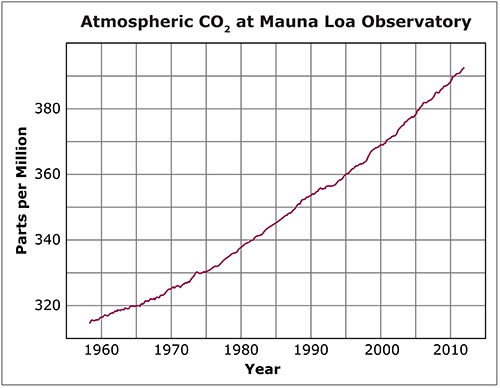
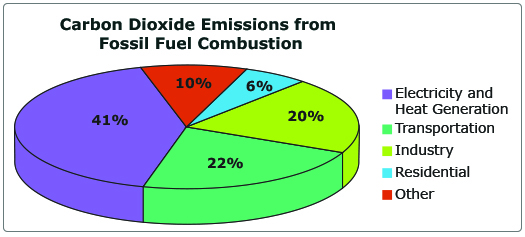
Fossil fuels are the remains of ancient plants and animals. As such, they were formed either directly or indirectly by the process of photosynthesis. By burning them, we are completing the carbon cycle that was delayed by their fossilization. One problem with this is that the formation of fossil fuels through the process of photosynthesis released the oxygen that makes up about one-fifth of the modern atmosphere. Burning fossil fuels will not deplete all of the planet’s life-giving oxygen, but it can alter the composition of the atmosphere, increasing atmospheric levels of carbon dioxide.
High levels of carbon dioxide trap heat in the atmosphere and can increase temperatures. Using fuels that can be grown fast may cycle carbon more rapidly. This could reduce the buildup of carbon dioxide. Known as biofuels, these products include wood, plant oils, and plant derivative products such as ethanol. Ethanol is widely used as an additive to gasoline. It is made by fermenting sugars made by plants through the process of photosynthesis.
Millions of years of evolution have proven that photosynthesis is an efficient and ideal process for harnessing energy. Taking that idea, scientists are now attempting to manufacture the products of photosynthesis in a process called artificial photosynthesis.
The Joint Center for Artificial Photosynthesis (JCAP) is a division of the U.S. federal government’s Department of Energy. The goal of scientists at JCAP is to develop methods of using Earth’s own natural resources to develop a generator that uses the reactants of photosynthesis—sunlight, water, and carbon dioxide—to produce fuel. Scientists at JCAP predict that their generator could possibly be up to ten times more efficient in fuel production than typical crops. The process could theoretically be used to remove excess carbon dioxide from the atmosphere created by burning fossil fuels.
Teacher Note
Use this as a formative assessment to check that students understand where carbon dioxide in the atmosphere comes from and how photosynthesis removes it from the atmosphere. Students could do this individually or in pairs.
Have students share their arguments in small groups and critique one another’s reasoning for why there should, or should not, be financing for artificial photosynthesis and biofuels. Instruct students to base their reasoning on evidence learned from the lesson or researched on the Internet. Students should also use data provided by the two graphs to support their arguments.
Inform students that their reports must be structured to include an introduction, supportive paragraphs, and a conclusion, and the connections between concepts and ideas should be cohesive. Introductions should clearly present the student’s opinion, and there should be at least one paragraph in the body for every argument or claim that is used. Finally, the conclusion should summarize and restate the student’s position.
Have students evaluate the credibility and accuracy of the Internet sources they use for their reports. If necessary, review with students the criteria for credible sources.